
TOPICS


English
Browse our collection of persuasive language worksheets and other resources. Persuasive language aims to convince the reader of an idea or an opinion. To be persuasive, we must choose our words carefully. There are several persuasive language devices and techniques that can help, including modality, hyperbole, similes, metaphors, rhetorical questions, using facts, alliteration and involving the reader. Watch our Persuasive Language Video Series. Find more resources at Persuasive Writing (Writing).
Use the filter above to narrow the results by resource type and/or grade level.

 Resource Type

 Grade
Grade

 Sort By
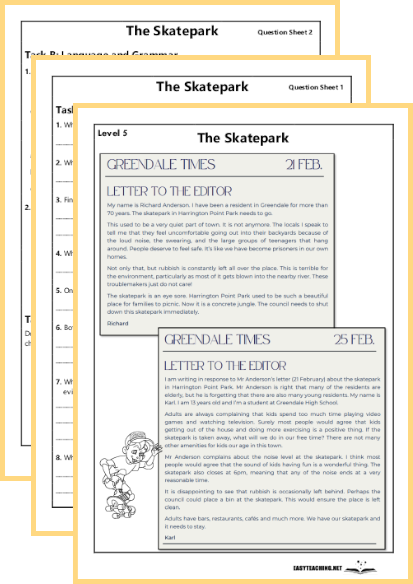
‘The Skatepark’ Grammar & Comprehension

A level 5 reading passage, comprehension and grammar set.

‘Thrill Valley’ Grammar & Comprehension
A level 4 reading passage, comprehension and grammar set.

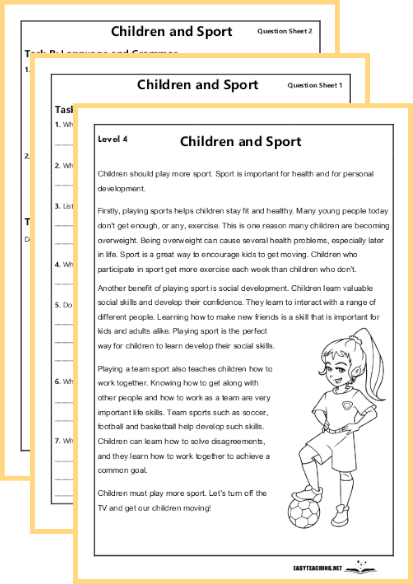
‘Children and Sport’ Grammar & Comprehension
A level 4 reading passage, comprehension and grammar set.
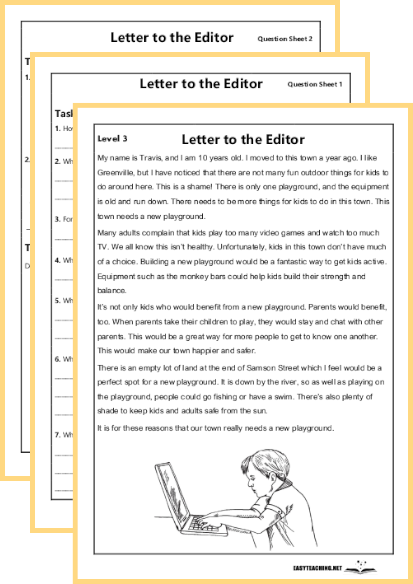
‘Letter to the Editor’ Grammar & Comprehension
A level 3 reading passage, comprehension and grammar set.

‘Sports’ Grammar & Comprehension
A level 3 reading passage, comprehension and grammar set.

Persuasive Lang. Vocab Cards
A set of word cards showing vocabulary often used in persuasive writing.
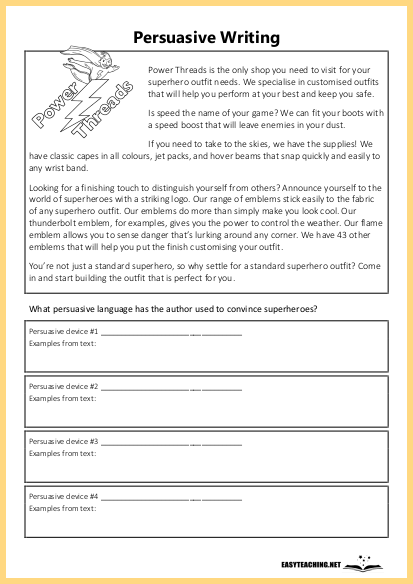
Persuasive Devices: Superhero Ad
Read the advertisement and identify the persuasive devices used.
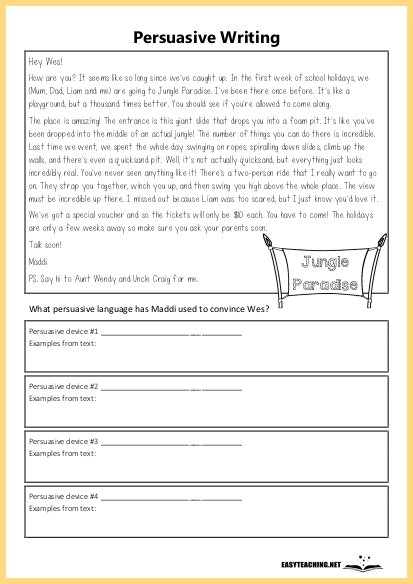
Persuasive Devices in a Letter
Read the letter and identify the persuasive devices used.

Using Evaluative Language
Add evaluative language to each sentence.

Modal Verbs Poster
A poster showing different modal verbs.
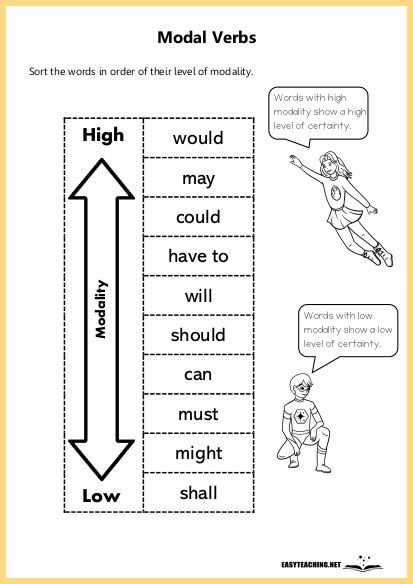
Modal Verbs Order
Cut and paste the modal verbs in order of strength.
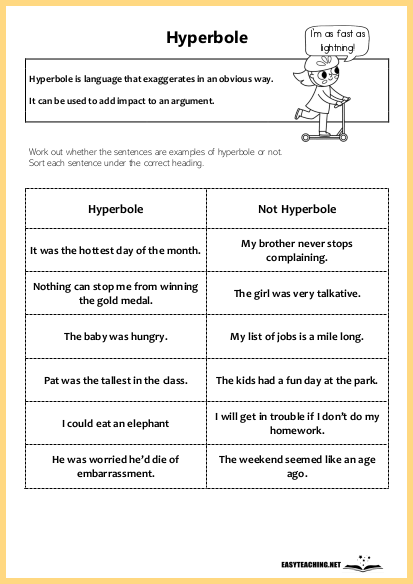
Hyperbole or Not?
Cut and paste to show whether or not the statements are examples of hyperbole.
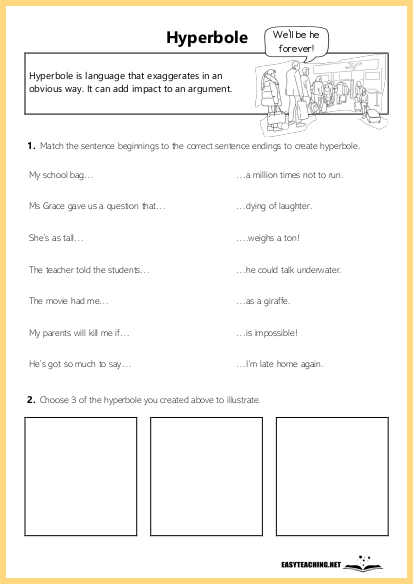
Hyperbole Sentence Match
Match sentence fragments to create hyperbole.
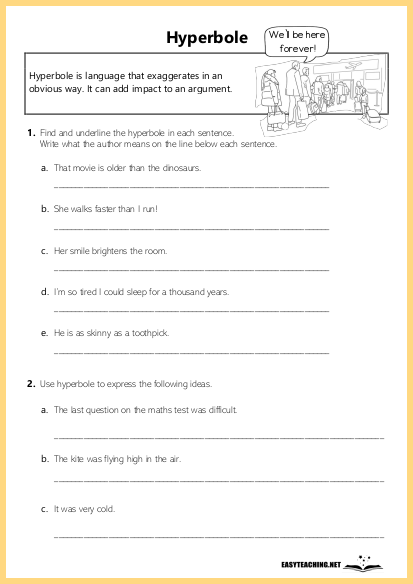
Identify & Explain Hyperbole
Explain the hyperbole used in each sentence.
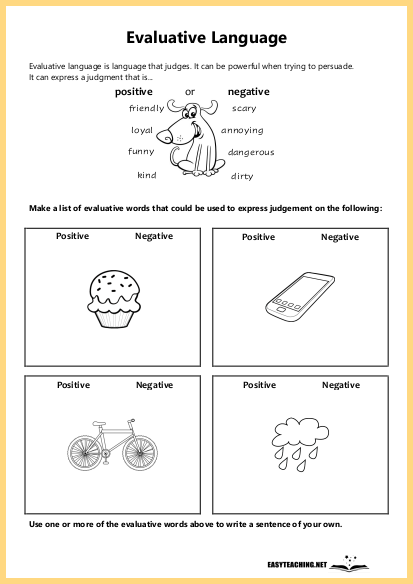
Writing Evaluative Words
Make lists of evaluative language to match the pictures given.
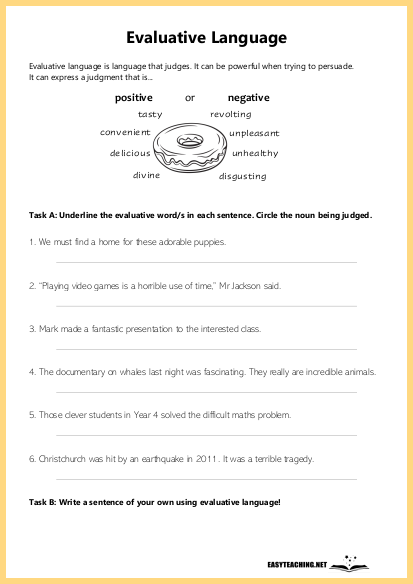
Identifying Evaluative Language
Find the evaluative language used in each sentence.
EASYTEACHING.NET


